The casino industry witnesses remarkable growth as online casinos UK transform the landscape across Las Vegas, Atlantic City, and Macau. Several leading casino groups have jointly introduced cutting-edge facilities, marking a major achievement in the sector’s recovery following the pandemic and signaling strong optimism in the international entertainment industry. The Latest Trend of Gaming Platform Debuts Transforming the Sector The casino industry undergoes a critical evolution as major operators allocate significant resources in modern infrastructure created to engage today’s players. These establishments include advanced gaming technology, luxury accommodations, and premier entertainment destinations that transform visitor expectations across all three markets. Strategic planning plays a crucial role in this synchronized growth, with brands taking advantage of growing consumer demand and international travel recovery. Each property showcases distinctive design elements and facilities adapted for area-specific needs while preserving global hospitality standards. Industry analysts forecast these developments will produce thousands of career positions and considerably improve local economies. The simultaneous openings represent a calculated response to growing demand for upscale leisure offerings in recognized gaming hubs worldwide. Strategic Market Selection Drives Growth Achievement Casino operators have systematically reviewed demographic trends, regulatory environments, and financial metrics to determine ideal sites for their latest facilities. This methodical approach ensures maximum return on investment while minimizing operational risks in an intensely competitive marketplace. The evaluation approach involved thorough market analysis evaluating area tourism data, infrastructure capabilities, and customer expenditure patterns. Market operators targeted areas exhibiting stable growth trajectories and advantageous legal conditions to support long-term sustainability. Leading Metropolitan Areas Spearheading Growth Major metropolitan centers remain at the forefront of casino expansion strategies due to their high population density and established entertainment ecosystems. Las Vegas and Macau stand as leading markets, offering unparalleled visitor traffic and proven revenue generation capabilities for gaming establishments. These metropolitan centers offer gaming establishments with access to international travelers, conference participants, and local patrons seeking premium entertainment options. The concentration of hotel and dining services and transit systems additionally strengthens their appeal as prime business destinations. Regional Resort Destinations Draw Investment Atlantic City has emerged as a key hub for casino development, capitalizing on its coastal location and proximity to large East Coast urban areas. The market provides gaming companies opportunities to tap into local gaming demand while benefiting from existing travel infrastructure. Resort-style properties in these secondary markets integrate gaming options with comprehensive amenities including upscale lodging, dining venues, and entertainment venues. This unified model appeals to multiple guest types and increases length of stay substantially. New Markets Show Strong Revenue Potential Operators are recognizing untapped markets where gaming legislation has recently evolved to permit casino operations. These emerging territories present first-mover advantages and opportunities to establish brand dominance before competition accelerates across the region. Market evaluation shows newer gaming regions often undergo accelerated development phases as latent market demand materializes. Deliberate competitive positioning in these jurisdictions allows operators to capture substantial market share while fostering customer commitment from inception. Innovative Offerings Set Apart Contemporary Gaming Venues The newest casinos display advanced systems that transforms gaming sessions through artificial intelligence-driven customization and engaging online platforms. Modern casino design incorporates eco-conscious building practices, featuring efficient power solutions and environmentally responsible materials that minimize ecological footprint while maintaining premium quality. Contactless payment solutions throughout gaming floors Virtual reality entertainment zones and lounges Biometric security and security systems Smart room systems with voice-controlled controls Mobile integrated apps for services State-of-the-art air purification and climate systems These digital improvements position the properties as market frontrunners, engaging technology-minded players who expect effortless combination of technological amenities with traditional gaming. Launch Schedule and Capital Requirements The synchronized unveiling of these five leading gambling properties represents a total capital commitment surpassing $8.7 billion, with construction timelines extending across 24 to 36 months. Each property has deliberately planned its official launch to enhance competitive positioning while sidestepping simultaneous launches for press coverage and visitor reservations during the pivotal debut window. Casino Property Location Investment Amount Opening Date Constellation Resort & Casino Las Vegas Strip $2.4 billion March 15, 2024 Azure Bay Gaming Complex Atlantic City $1.8 billion April 22, 2024 Dynasty Palace Macau Cotai Strip $2.9 billion May 8, 2024 Meridian Grand Casino Las Vegas Downtown $950 million June 3, 2024 Sapphire Shores Resort Atlantic City Boardwalk $650 million July 12, 2024 Industry analysts forecast these developments will create approximately 18,500 full-time jobs across all three markets, with an additional 12,000 construction jobs created during the construction period. The staggered opening schedule allows gaming venues to refine their service delivery models based on initial performance data from the first locations. Financial projections indicate a collective first-year income goal of $3.2 billion, with break-even timelines estimated between 48 and 60 months based on market conditions and operational efficiency. Each operator has obtained funding through a combination of corporate bonds, institutional investment, and key partnerships with global gaming conglomerates. Financial Impact and Future Industry Prospects The simultaneous launch of five major casino properties across three strategic markets represents a combined investment exceeding $8 billion, generating approximately 15,000 permanent jobs and thousands of construction positions. Local economies anticipate substantial tax increases, with projections estimating over $500 million annually in gaming taxes alone. These developments strengthen tourism infrastructure and position each destination as a premier entertainment hub for international visitors. Industry analysts anticipate these expansions will drive additional development in surrounding areas, encouraging hotel construction, restaurant openings, and retail growth. The incorporation of cutting-edge technology and sustainable building practices establishes benchmarks for upcoming developments, motivating industry players to modernize and improve existing facilities. Financial markets have shown strong support, with gaming sector stocks recording substantial gains following the announcement of these strategic initiatives. Moving forward, the success of these properties will likely influence investment decisions across the worldwide gaming sector in the coming years. Growing economies in Asia and the Middle East show particular interest in adopting this expansion approach, while mature markets focus on renovation and technological upgrades. The combination of entertainment, hospitality, and digital technology creates unprecedented opportunities for growth,
Category: Uncategorized
Understanding bonus wagering requirements before you claim your next casino promotion
Casino promotions can seem incredibly attractive at first glance, but comprehending games not on GamStop is crucial before you accept any offer. These conditions determine how many times you must play through your bonus funds before withdrawing winnings, and they can substantially affect your overall gaming experience and possible earnings. What Are Bonus Betting Requirements and Why Do They Matter? When internet gambling sites offer promotional bonuses, they attach specific conditions that players must fulfill before converting bonus funds into withdrawable cash. These playthrough conditions indicate how many times you need to bet the bonus amount, and occasionally the deposit total, through qualifying games. For example, a $100 bonus with 30x wagering requirement means you must place $3,000 in bets before cashing out any winnings derived from that bonus. Understanding these terms is important because they directly impact your capacity to earn from gaming offers and ascertain whether an offer delivers real worth. A apparently attractive bonus with excessive playthrough demands might prove less advantageous than a smaller bonus with reasonable conditions. Players who overlook these requirements often encounter frustration when seeking to cash out, only to realize their balance is frozen until they satisfy particular wagering limits. The structure of playthrough conditions differs considerably across different casinos and promotional offers, making it crucial to assess each promotion on a case-by-case basis. Some casinos apply conditions only to bonus money, while some casinos include your original deposit in the assessment, essentially multiplying the amount you must play through. Additionally, various game types contribute varying percentages toward meeting these requirements, with slots typically contributing 100% while traditional games might count significantly lower amounts or nothing at all. How Bonus Play Requirements Work in Internet Gaming Platforms When you claim a casino bonus, the promotional funds don’t immediately become withdrawable cash. Instead, you must play through the bonus amount a set quantity of times before turning it into real money. This multiplier, typically ranging from 20x to 50x, determines the total amount you need to wager. For example, a $100 bonus with 30x requirements means you’ll need to make $3,000 in wagers before withdrawal eligibility. The casino monitors your progress automatically as you play eligible games. Your account dashboard typically shows remaining wagering obligations and how much you’ve completed. Understanding this mechanism helps you select bonuses that align with your playing style and budget, ensuring you can realistically fulfill the conditions within the given period without overextending your bankroll. Calculating Your Total Gaming Commitment The computation method relies on whether the requirement pertains to the bonus only or the bonus plus deposit amount. A $50 bonus with 30x wagering requirement on bonus only requires $1,500 in bets ($50 × 30). However, if the requirement applies to bonus plus deposit and you deposited $100, you’d need to wager $4,500 (($100 + $50) × 30). Be sure to verify which calculation method the casino employs prior to claiming. Some special deals include layered systems where different game types contribute fluctuating percentages toward your total. A $10 wager on slot machines might count as $10 toward requirements, while the same bet on blackjack might only count as $2. These contribution rates dramatically affect how fast you can meet a bonus, making it crucial to review the complete terms before commencing your play. Games That Contribute To Wagering Requirements Slot machines typically count toward 100% toward meeting playthrough conditions, making them the optimal choice for fulfilling bonuses. Table games like roulette and blackjack often contribute significantly less, usually between 10-25%, due to their lower house edge. Some gaming venues exclude certain games completely, particularly live dealer games and progressive jackpot slots, from bonus bonus calculations. Video poker and specialty games fall somewhere in the middle, with contribution rates differing significantly between casinos. Before playing, check the game weighting table in the bonus terms to determine which options help you meet requirements most efficiently. Careful game choices can lower the total sum you need to bet and increase your chances of successfully turning bonus money into withdrawable winnings. Duration Limits Casino bonuses are not permanent inclusions in your account. Most offers feature expiration periods ranging from 7 to 30 days, following which unclaimed bonus money and associated winnings vanish. This time constraint generates urgency to fulfill betting conditions rapidly, which can lead to hasty choices and bigger wagers than your budget comfortably allows if you’re not mindful of planning your gaming sessions. Some casinos implement daily or weekly wagering caps that restrict the amount you’re able to wager toward requirements within specific timeframes. These restrictions increase the duration needed to clear a bonus, potentially conflicting with expiration dates. Always determine if you have sufficient time to realistically meet the conditions given these limitations, and think about rejecting promotions that fail to match with your available playing schedule. Common Types of Wagering Requirements You’ll Encounter The most typical type is the deposit plus bonus requirement, where you must wager both your starting deposit and the bonus amount a set number of times. For example, if you deposit $100 and receive a $100 bonus with 30x playthrough, you’ll need to bet $6,000 before withdrawing. This structure is common among welcome bonuses and reload offers at most internet casinos. Bonus-only playthrough conditions only apply to the bonus amount, making them more advantageous to players than combined requirements. If you claim a $50 bonus with 25x playthrough, you just need to play through $1,250 total. These offers commonly show up during promotional periods or loyalty incentives, though they’re less frequent than deposit-plus-bonus structures. Free spins earnings conditions represent another category, where any profits from complimentary spins must be played through before withdrawal. A 40x requirement on $20 in free spin winnings means betting $800 total. Some casinos also offer sticky bonuses that cannot be withdrawn themselves, only the profits earned, which affects your overall strategy and funds management approach. Red Flags and Terms to Watch Out For Not all casino bonuses are the same, and some contain unfavorable terms that
Guida dettagliata ai casino online stranieri non AAMS e alternative legali
Negli ultimi anni, l’interesse verso i Casino online stranieri non AAMS è cresciuto notevolmente tra i giocatori italiani che cercano alternative alle piattaforme regolamentate dall’Agenzia delle Dogane e dei Monopoli. Questa guida completa esplora le caratteristiche, i benefici e i profili legali di tali piattaforme, offrendo una panoramica dettagliata per chi desidera comprendere meglio questo settore in continua evoluzione. Cosa sono i casinò virtuali stranieri non AAMS Si tratta di piattaforme di gioco d’azzardo che dispongono di licenze rilasciate da organismi di controllo internazionali diverse dall’AAMS italiana, come Malta Gaming Authority, UK Gambling Commission o Curaçao eGaming. Questi siti mettono a disposizione servizi di casinò, scommesse sportive e poker ai clienti italiani pur non possedendo la licenza nazionale richiesta per funzionare in modo legittimo sul territorio italiano secondo la normativa vigente. Le caratteristiche distintive includono spesso bonus più generosi rispetto ai casinò con licenza italiana, una gamma più ampia di metodi di pagamento incluse criptovalute, limiti di deposito e prelievo più flessibili, e un catalogo di giochi più vasto proveniente da numerosi fornitori di software. Molte di queste piattaforme presentano interfacce multilingue e supporto clienti disponibile in italiano per attrarre specificamente il pubblico del nostro paese. Benché operino con licenze valide emesse da giurisdizioni riconosciute a livello internazionale, questi operatori si trovano in una area incerta dal punto di vista della legalità italiana. La legislazione nazionale prevede che solo i casinò approvati dall’ADM possano fornire prestazioni di giochi d’azzardo ai residenti in Italia, rendendo l’accesso a queste piattaforme estere una scelta che comporta determinate implicazioni normative e tributarie per i giocatori. Punti forti e deboli dei casino non AAMS I casino online con licenze internazionali offrono opportunità diverse rispetto alle piattaforme tradizionali italiane, presentando caratteristiche uniche che attraggono molti giocatori. È fondamentale valutare attentamente tutti gli aspetti prima di decidere dove giocare online. La scelta di una piattaforma di casino richiede un esame accurato dei aspetti positivi e negativi, considerando fattori come tutela della privacy, varietà di giochi, bonus disponibili e sistemi di transazione. Capire le distinzioni aiuta a effettuare scelte responsabili e ponderate. Principali vantaggi dei casinò esteri Le piattaforme con licenze internazionali generalmente offrono bonus di benvenuto molto generosi, con percentuali superiori e requisiti di scommessa più favorevoli rispetto ai siti regolamentati ADM. I giocatori hanno accesso a promozioni esclusive e programmi di fedeltà convenienti. Un ulteriore elemento di forza rilevante è la ampia varietà di giochi disponibili, inclusi giochi dei migliori provider mondiali non sempre presenti sui portali locali. I limiti di puntata sono solitamente meno rigidi e i metodi di pagamento includono criptovalute e wallet digitali innovativi. Aspetti negativi e rischi da valutare Il rischio primario concerne l’mancanza di protezioni legali dirette in Italia, poiché questi gestori non sono soggetti al controllo dell’ADM. In caso di controversie, il cliente potrebbe incontrare difficoltà nel esercitare i propri diritti presso le autorità italiane. Altri elementi importanti comprendono potenziali difficoltà con ritardi nei prelievi, supporto ai clienti non sempre in italiano e problemi nel verificare l’affidabilità dell’operatore. La mancanza di filtri e restrizioni vincolanti può inoltre costituire un pericolo per i giocatori a rischio dipendenti dal gioco. Confronto con i casinò AAMS autorizzati I casino regolamentati con licenza ADM assicurano livelli di protezione certificati dallo Stato italiano, con controlli rigorosi sulla correttezza dei giochi e protezione dei fondi dei giocatori. Le piattaforme nazionali offrono anche strumenti obbligatori per il gioco responsabile e limiti di deposito predefiniti. D’altra parte, i siti autorizzati in Italia offrono imposte superiori sulle vincite, selezioni di titoli talvolta limitati e incentivi poco attrattivi. La decisione dipende dalle priorità individuali: massima sicurezza legale o ampia gamma di opzioni e benefici finanziari con rischi calcolati. Aspetti normativi e la sicurezza nei casinò stranieri La questione legale è uno degli aspetti più delicati quando si parla di siti di gaming non regolamentate in Italia. Secondo la regolamentazione in vigore, operare senza licenza ADM sul territorio italiano costituisce un’attività non autorizzata, sebbene la legislazione europea assicuri la circolazione libera dei servizi. I giocatori italiani non sono soggetti a sanzioni penali per l’utilizzo di questi portali, ma è essenziale capire che le piattaforme stesse operano in una area grigia dal punto di vista normativo nazionale. La protezione delle transazioni e la salvaguardia dei dati personali rappresentano priorità assolute nella scelta di un casino online estero. Le piattaforme attendibili implementano protocolli di crittografia SSL a 256 bit, meccanismi di verifica a due fattori e politiche rigorose sulla privacy. È essenziale verificare che il sito possegga licenze rilasciate da autorità riconosciute come Malta Gaming Authority, UK Gambling Commission o Curaçao eGaming, che garantiscono standard alti di sicurezza e chiarezza nelle operazioni. Un elemento fondamentale riguarda la protezione del giocatore e le misure di gioco responsabile implementate dalle piattaforme internazionali. I casino affidabili e sicuri offrono funzioni di autoesclusione, limiti di deposito regolabili, timer di gioco e accesso a strumenti per il contrasto della ludopatia. La presenza di certificazioni indipendenti come eCOGRA o iTech Labs testimonia l’impegno del casino verso pratiche di gioco trasparenti e trasparenti, con verifiche regolari sui generatori di numeri casuali e sui pagamenti. Il supporto ai clienti costituisce un elemento cruciale dell’affidabilità di un casino straniero. Le piattaforme legittime offrono assistenza multilingue disponibile 24 ore al giorno attraverso chat dal vivo, email e talvolta supporto telefonico. La velocità di risposta, la professionalità dello staff e la presenza di materiali informativi completi in italiano sono elementi che differenziano i casino professionali da quelli meno affidabili, garantendo un’sessione di gioco protetta e gratificante per gli giocatori italiani. Come selezionare un casino online internazionale sicuro La scelta di piattaforma di gaming straniera richiede una valutazione accurata per assicurare sicurezza e affidabilità. È fondamentale esaminare diversi aspetti prima della registrazione. Certificazioni globali validate Le autorità di regolamentazione più affidabili includono la Malta Gaming Authority (MGA), la UK Gambling Commission e la licenza di Curaçao. Queste garantiscono standard elevati di sicurezza. Una licenza valida garantisce che il casino funzioni secondo regolamenti stringenti, con verifiche periodiche sui giochi d’azzardo e sulla protezione dei fondi
Whales: Giants of the Ocean
Whales: Giants of the Ocean Whales are among the largest and most remarkable animals on Earth. These marine mammals live in oceans around the world, from warm tropical waters to the cold seas surrounding the poles. Life Beneath the Surface Although whales spend their lives in water, they breathe air through blowholes located on top of their heads. They must regularly return to the surface to breathe before diving again in search of food or traveling through the ocean. Whales are warm-blooded, give birth to live young, and nurse their calves with milk. A thick layer of fat called blubber helps protect them from cold water and stores energy during long migrations. Two Main Groups Whales are generally divided into baleen whales and toothed whales. Baleen whales filter small animals from the water using flexible plates inside their mouths. This group includes blue whales, humpback whales, and gray whales. Toothed whales use teeth to catch fish, squid, and other prey. Many of them also use echolocation, producing sounds and listening for returning echoes to understand their surroundings. Sperm whales, belugas, and orcas belong to this group. The Blue Whale The blue whale is the largest known animal to have ever lived. An adult can grow longer than a city bus and weigh well over one hundred tonnes. Despite its enormous size, it feeds mainly on tiny crustaceans called krill. Communication and Migration Whales communicate using clicks, whistles, pulses, and complex songs. Some sounds can travel across great distances underwater. Humpback whales are especially famous for their long, patterned songs. Many species migrate thousands of kilometres each year. They often feed in cold, nutrient-rich waters before traveling to warmer regions where they mate and give birth. Protecting Whales Commercial hunting once caused severe declines in many whale populations. Today, whales also face threats from fishing gear, ship collisions, underwater noise, pollution, and changes to ocean ecosystems. Conservation programs, safer fishing practices, protected habitats, and international cooperation can help whale populations recover. Protecting whales also supports healthier oceans because these animals play an important role in marine food webs and nutrient cycles.
Whales: Giants of the Ocean
Whales: Giants of the Ocean Whales are among the largest and most remarkable animals on Earth. These marine mammals live in oceans around the world, from warm tropical waters to the cold seas surrounding the poles. Life Beneath the Surface Although whales spend their lives in water, they breathe air through blowholes located on top of their heads. They must regularly return to the surface to breathe before diving again in search of food or traveling through the ocean. Whales are warm-blooded, give birth to live young, and nurse their calves with milk. A thick layer of fat called blubber helps protect them from cold water and stores energy during long migrations. Two Main Groups Whales are generally divided into baleen whales and toothed whales. Baleen whales filter small animals from the water using flexible plates inside their mouths. This group includes blue whales, humpback whales, and gray whales. Toothed whales use teeth to catch fish, squid, and other prey. Many of them also use echolocation, producing sounds and listening for returning echoes to understand their surroundings. Sperm whales, belugas, and orcas belong to this group. The Blue Whale The blue whale is the largest known animal to have ever lived. An adult can grow longer than a city bus and weigh well over one hundred tonnes. Despite its enormous size, it feeds mainly on tiny crustaceans called krill. Communication and Migration Whales communicate using clicks, whistles, pulses, and complex songs. Some sounds can travel across great distances underwater. Humpback whales are especially famous for their long, patterned songs. Many species migrate thousands of kilometres each year. They often feed in cold, nutrient-rich waters before traveling to warmer regions where they mate and give birth. Protecting Whales Commercial hunting once caused severe declines in many whale populations. Today, whales also face threats from fishing gear, ship collisions, underwater noise, pollution, and changes to ocean ecosystems. Conservation programs, safer fishing practices, protected habitats, and international cooperation can help whale populations recover. Protecting whales also supports healthier oceans because these animals play an important role in marine food webs and nutrient cycles.
Whales: Giants of the Ocean
Whales: Giants of the Ocean Whales are among the largest and most remarkable animals on Earth. These marine mammals live in oceans around the world, from warm tropical waters to the cold seas surrounding the poles. Life Beneath the Surface Although whales spend their lives in water, they breathe air through blowholes located on top of their heads. They must regularly return to the surface to breathe before diving again in search of food or traveling through the ocean. Whales are warm-blooded, give birth to live young, and nurse their calves with milk. A thick layer of fat called blubber helps protect them from cold water and stores energy during long migrations. Two Main Groups Whales are generally divided into baleen whales and toothed whales. Baleen whales filter small animals from the water using flexible plates inside their mouths. This group includes blue whales, humpback whales, and gray whales. Toothed whales use teeth to catch fish, squid, and other prey. Many of them also use echolocation, producing sounds and listening for returning echoes to understand their surroundings. Sperm whales, belugas, and orcas belong to this group. The Blue Whale The blue whale is the largest known animal to have ever lived. An adult can grow longer than a city bus and weigh well over one hundred tonnes. Despite its enormous size, it feeds mainly on tiny crustaceans called krill. Communication and Migration Whales communicate using clicks, whistles, pulses, and complex songs. Some sounds can travel across great distances underwater. Humpback whales are especially famous for their long, patterned songs. Many species migrate thousands of kilometres each year. They often feed in cold, nutrient-rich waters before traveling to warmer regions where they mate and give birth. Protecting Whales Commercial hunting once caused severe declines in many whale populations. Today, whales also face threats from fishing gear, ship collisions, underwater noise, pollution, and changes to ocean ecosystems. Conservation programs, safer fishing practices, protected habitats, and international cooperation can help whale populations recover. Protecting whales also supports healthier oceans because these animals play an important role in marine food webs and nutrient cycles.
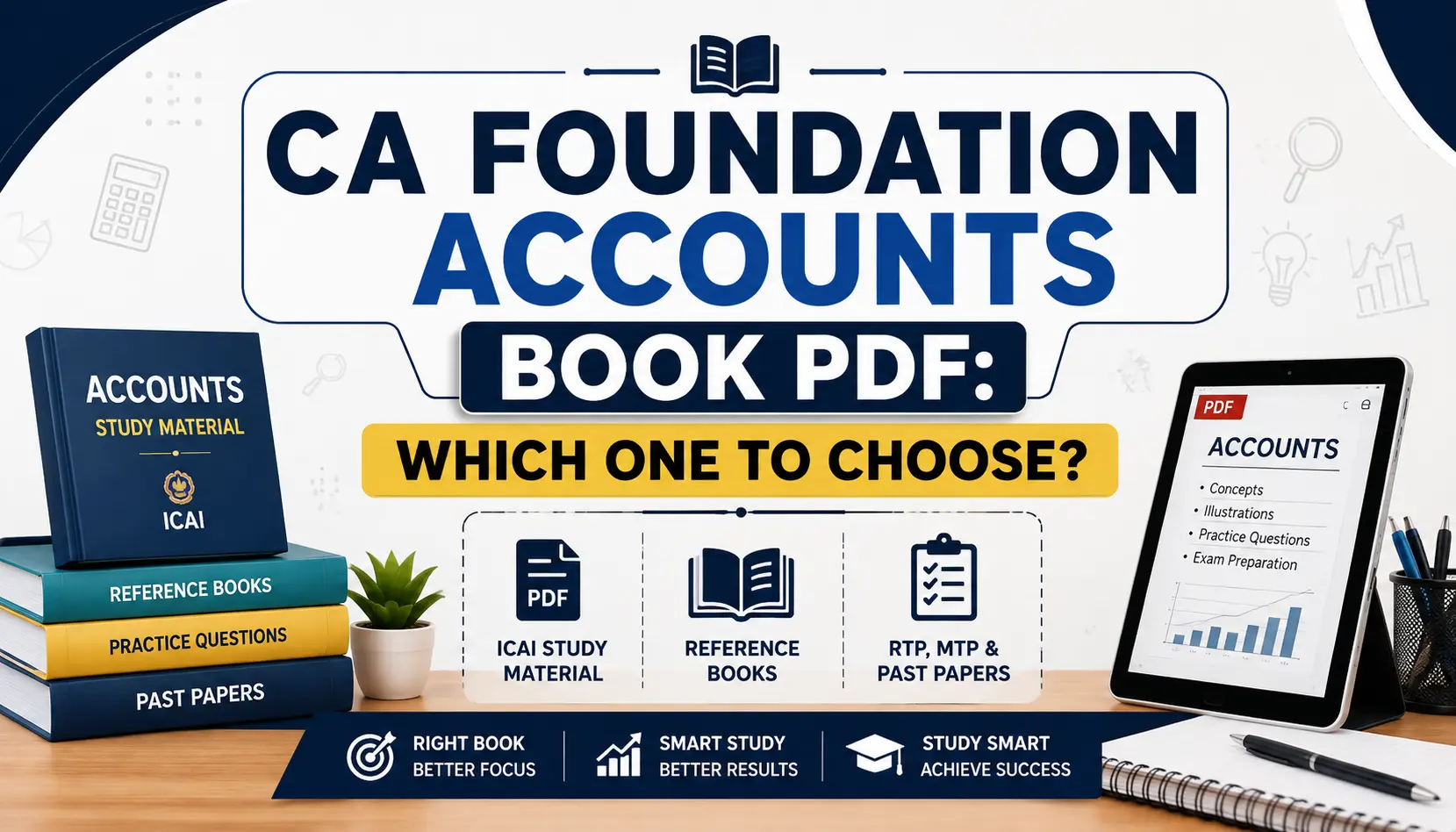
CA Foundation Accounts Book PDF: Which One to Choose?
Preparing for the CA Foundation Accounts exam often begins with one simple question: Which CA Foundation Accounts Book PDF should I study? A quick online search shows hundreds of PDFs, notes, and reference books. This can make it difficult for students to decide which material is actually useful. The right approach is not to collect multiple PDFs but to choose the right study resources in the correct order. This guide explains which study materials should be your priority, when reference books become useful, and how to prepare efficiently without unnecessary confusion. Quick Answer If you are wondering which CA Foundation Accounts Book PDF is the best, here’s the simple answer: Start with the official ICAI Study Material PDF. Use reference books only for additional practice and concept clarity. Practice regularly with the latest RTP, MTP, and Previous Year Question Papers. Avoid relying on outdated or unofficial PDFs available on random websites. For most students, this combination provides everything required for effective exam preparation. Why Choosing the Right Accounts Book Matters Many students believe studying from multiple books improves preparation. In reality, using too many resources often creates: Confusion between different explanations Inconsistent accounting formats Less revision time Difficulty remembering concepts A focused study plan with trusted resources generally produces better results than collecting dozens of PDF The Best Starting Point: Official ICAI Study Material The official study material should always be your first choice. This is because: The examination follows the official syllabus. Core accounting concepts are explained according to the prescribed curriculum. Many question formats are based on official study material. It builds the strongest conceptual foundation. For every CA Foundation student, the official material should remain the primary source throughout preparation. Should You Study Only One Book? Yes—for most students. Instead of studying five different books once, it is usually more effective to study one reliable source several times. Repeated revision helps you: Improve conceptual understanding Increase speed Remember accounting formats Reduce exam stress A single well-revised book is often more valuable than multiple partially completed books. When Should You Use Reference Books? Yes—for most students. Instead of studying five different books once, it is usually more effective to study one reliable source several times. Repeated revision helps you: Improve conceptual understanding Increase speed Remember accounting formats Reduce exam stress A single well-revised book is often more valuable than multiple partially completed books. READ MORE: Looking for expert guidance beyond choosing the right study material? Explore CA Jitin Tyagi Coaching Classes to compare verified faculty, access Live Online, Google Drive, and Pen Drive classes, and receive complete counselling for your CA Foundation preparation journey. Popular Types of Reference Books Yes—for most students. Instead of studying five different books once, it is usually more effective to study one reliable source several times. Repeated revision helps you: Improve conceptual understanding Increase speed Remember accounting formats Reduce exam stress A single well-revised book is often more valuable than multiple partially completed books. Essential PDFs Every Student Should Have Besides your main Accounts book, every CA Foundation student should regularly practice these documents. Revision Test Papers (RTP) Revision Test Papers help students understand: Recent examination trends Important topics Expected question styles They are especially useful during the final revision phase. Mock Test Papers (MTP) Mock Test Papers allow students to experience exam-like practice. Benefits include: Better time management Improved writing speed Familiarity with question patterns Increased confidence Previous Year Question Papers Previous papers help students understand: Frequently tested concepts Answer presentation Step marking Practical question formats Regular practice also reduces examination anxiety. Avoid Downloading Random PDFs Many students download study material from unofficial websites or messaging groups. This can create problems such as: Outdated syllabus Old accounting standards Missing chapters Incorrect solutions Incomplete content Always ensure your study material matches the latest syllabus before beginning preparation. A Smart Study Strategy for CA Foundation Accounts A practical preparation strategy can be as follows: Step 1 Complete the official study material carefully. Step 2 Understand every accounting concept before memorising formats. Step 3 Use one reference book only if additional practice is needed. Step 4 Solve the latest RTP and MTP regularly. Step 5 Practice previous year question papers under exam conditions. Step 6 Revise the same material multiple times instead of switching between books Common Mistakes Students Make Avoid these common preparation mistakes: Downloading every available PDF Studying from multiple books simultaneously Ignoring official study material Skipping revision Not solving mock papers Using outdated editions Depending only on handwritten notes Consistency is more valuable than collecting study resources. How Coaching Guidance Can Help Choosing the right book is only one part of CA preparation. Many students also need guidance on: Selecting the right faculty Understanding subject-wise preparation strategies Choosing between Live Online, Google Drive, and Pen Drive classes Planning revision schedules Building a complete preparation roadmap A trusted coaching guidance platform can help students compare available learning options, understand different teaching approaches, and select coaching that matches their learning style. With expert counselling and access to verified faculty for CA Foundation, CA Intermediate, and CA Final, students can make informed decisions without unnecessary confusion. Final Thoughts Choosing the right CA Foundation Accounts Book PDF is not about finding the largest collection of study material. Success comes from building a strong foundation with the official study material, using reference books only when needed, and regularly practising revision papers and previous year questions. Instead of chasing multiple PDFs, focus on understanding concepts, revising consistently, and following a structured preparation plan. A disciplined approach with the right resources can make your CA Foundation Accounts preparation more efficient and far less stressful. Frequently Asked Questions(FAQ) Which is the best CA Foundation Accounts Book PDF? The official study material should always be your first preference because it follows the prescribed syllabus and forms the foundation of exam preparation. Are reference books compulsory? No. Reference books are optional and mainly useful for extra practice, additional examples, and concept reinforcement after completing the official study material. Should I
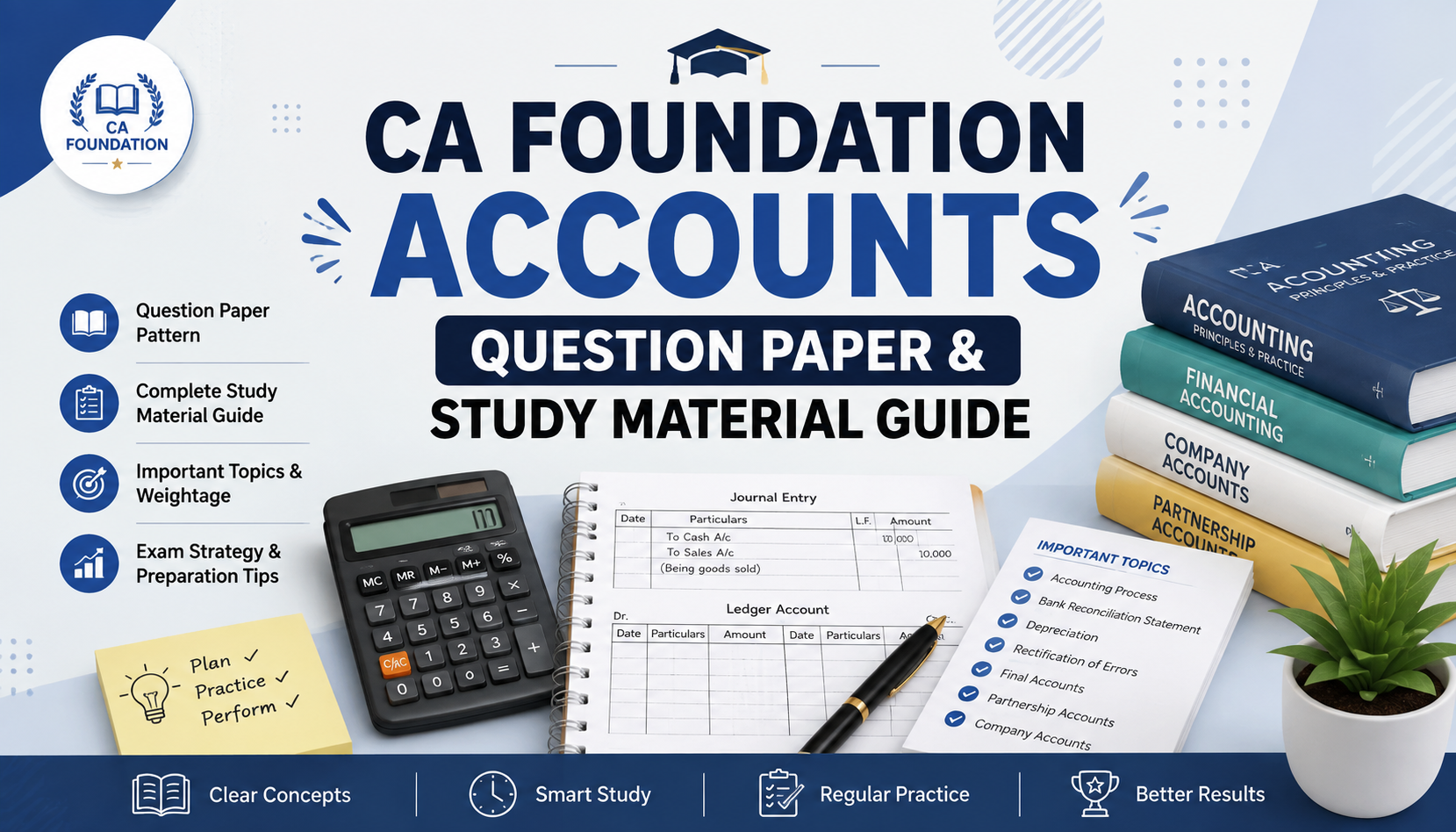
CA Foundation Accounts Question Paper & Study Material Guide
Preparing for the CA Foundation Accounts examination requires more than simply reading textbooks. A clear understanding of the question paper pattern, proper use of study material, and consistent practice are essential for scoring well. Many students spend a lot of time collecting different books, but often overlook the importance of mastering the official study resources and developing a structured preparation strategy. This guide explains how to prepare for the CA Foundation Accounts paper, understand the exam pattern, use study material effectively, and improve your chances of achieving excellent marks. Why the Right Study Material Matters One of the biggest mistakes students make is relying on multiple reference books before completing the official study material. A strong preparation strategy begins with thoroughly understanding the prescribed course material. The official study modules provide detailed explanations, practical illustrations, accounting formats, and conceptual clarity that help students build a solid foundation. Instead of dividing your attention across several books, focus on mastering one reliable source completely before exploring additional practice material. A well-planned approach improves accuracy, confidence, and examination performance. How to Study CA Foundation Accounts Effectively A systematic study plan can make preparation easier and more productive. Solve Every Practical Question Reading accounting questions is not enough. Every illustration and practical problem should be solved manually. Writing journal entries, preparing ledger accounts, balancing accounts, and creating financial statements by hand helps improve speed and reduces mistakes during the examination. Regular writing practice also develops familiarity with accounting formats and calculations. Don’t Ignore Theory Many students focus only on practical questions, but theoretical concepts are equally important. Concept-based questions and True or False statements often test fundamental accounting principles. Understanding these concepts strengthens your overall preparation and helps you answer both objective and descriptive questions confidently READ MORE: Explore CA Jitin Tyagi Coaching Classes for expert guidance and flexible Live Online, Google Drive, and Pen Drive learning options for CA Foundation, Inter, and Final preparation. Importance of Revision Test Papers and Mock Test Papers After completing the main study material, students should practice recent Revision Test Papers (RTPs) and Mock Test Papers (MTPs). These papers help students: Understand the latest examination pattern. Practice different question formats. Identify commonly tested concepts. Improve speed and accuracy. Build confidence before the final examination. Practicing multiple attempts also familiarizes students with how similar concepts may be presented in different ways. Understanding the CA Foundation Accounts Question Paper Pattern Knowing the question paper structure helps students manage time more effectively during the examination. The Accounts paper is a descriptive examination carrying 100 marks with a duration of three hours. Compulsory First Question The first question is compulsory and generally includes concept-based questions along with True or False statements and short practical or theoretical questions. This section offers an excellent opportunity to score quickly by applying basic accounting knowledge accurately. Remaining Questions The remaining questions generally cover major accounting topics. Students are expected to attempt the required number of questions according to the examination instructions. A balanced preparation across all chapters ensures that students are ready for every type of question High-Weightage Areas to Focus On Although every chapter is important, some topics require extra attention because they frequently appear in examinations. Students should give special importance to: Accounting Process Subsidiary Books Bank Reconciliation Statement (BRS) Rectification of Errors Depreciation Consignment Bills of Exchange Average Due Date Account Current Final Accounts Partnership Accounts Company Accounts including Issue of Shares, Forfeiture, and Debentures Understanding the concepts, formats, and adjustments related to these chapters can significantly improve overall performance Three Practical Tips to Score Higher in Accounts 1. Prepare Detailed Working Notes Working notes play a crucial role in descriptive accounting papers. Even if the final answer contains an error, properly presented calculations and working notes may help students secure valuable step marks. Always show calculations clearly instead of writing only the final answer. 2. Maintain Proper Presentation Presentation is an important part of accounting examinations. Use proper accounting formats while preparing journal entries, ledger accounts, and financial statements. Draw neat columns wherever required and keep your answers organized. A well-presented answer is easier for the examiner to evaluate and creates a positive impression. 3. Manage Examination Time Wisely Time management is often the difference between average and excellent scores. Before starting the paper, carefully read all questions and identify the ones you can solve confidently. Attempt easier questions first to build momentum and reserve sufficient time for lengthy practical problems. Practicing under timed conditions before the examination can greatly improve speed and confidence. Build a Smart Preparation Strategy Successful preparation is not about studying for long hours—it is about studying consistently and strategically. Students should: Complete the prescribed study material thoroughly. Practice every illustration manually. Revise important concepts regularly. Solve recent RTPs and MTPs. Focus on accuracy as well as speed. Improve answer presentation through continuous practice. Following a structured routine reduces examination stress and strengthens conceptual understanding.DIGIFOZ helps businesses grow through SEO, Google Ads, Meta Ads, Website Development, and Performance Marketing. Guidance for CA Foundation Students Choosing the right academic guidance can make preparation more organized and focused. Students often benefit from expert counselling that helps them understand the examination pattern, select suitable learning modes, and prepare according to their individual requirements. Our platform connects aspiring CA students with experienced faculty for CA Foundation, CA Intermediate, and CA Final coaching. Whether you are looking for Live Online Classes, Google Drive Classes, or Pen Drive Classes, students receive guidance in selecting the most suitable learning option along with counselling support throughout their preparation journey. Conclusion Success in the CA Foundation Accounts examination depends on conceptual clarity, regular writing practice, effective use of study material, and smart time management. Instead of relying on numerous books, students should first master the official study material, practice accounting formats consistently, and revise through RTPs and MTPs. With disciplined preparation, proper guidance, and a structured study plan, students can approach the examination with confidence and improve their chances of achieving excellent results. FAQ (frequently

What to Look for in Articleship by CA Students?
Articleship is one of the most important phases in a CA student’s journey. It is where theoretical knowledge meets practical exposure, helping students understand how the profession works in the real world. Choosing the right articleship can shape your learning, confidence, technical skills, and future career opportunities. Many students become anxious after completing their CA Intermediate examinations because they are unsure about where to apply, which firm to choose, and what skills they should develop before starting. The key is not to rush the decision. Instead, take time to understand your career goals and evaluate your options carefully. This guide explains the essential factors every CA student should consider before selecting an articleship and how proper planning can help build a successful career. Why Choosing the Right Articleship Matters Articleship is more than just a mandatory training period. It gives students practical experience in accounting, auditing, taxation, compliance, client communication, and professional ethics. The quality of this learning depends largely on the organization where the training is completed. A well-chosen articleship helps students: Gain practical exposure to real business situations Develop technical and professional skills Improve confidence while working with clients Prepare better for CA Final examinations Build a strong professional network For this reason, students should begin planning even before their examination results are announced rather than waiting until the last moment. Start with Career Clarity Before applying anywhere, ask yourself one important question: What kind of learning experience do I want from my articleship? Generally, students compare opportunities between larger firms and mid-sized firms. Instead of following trends, evaluate each option based on your own priorities. Create a simple list of advantages and challenges for every firm you are considering. Compare factors such as learning opportunities, work culture, exposure, study balance, location, and future career goals. This approach helps make a practical decision instead of an emotional one. Practical Exposure Should Be Your Priority One of the biggest objectives of articleship is learning practical work. A good training environment should expose students to different areas such as: Statutory Audit Internal Audit Stock Audit Taxation GST Compliance Income Tax Returns TDS Compliance Financial Reporting Client Documentation Exposure to multiple domains allows students to discover their strengths while building a solid professional foundation. Balance Learning with CA Final Preparation While practical experience is essential, students should also consider whether the work environment allows sufficient time for self-study. Articleship and CA Final preparation go hand in hand. A healthy work-life balance helps students remain productive without compromising either practical learning or examination preparation. Instead of choosing only based on a firm’s reputation, evaluate whether the overall environment supports long-term professional growth. Research Before Applying Good research can save students from making the wrong decision. Look for information about: Nature of work Learning opportunities Work culture Type of clients handled Training quality Professional guidance available Connecting with current or former trainees can provide valuable insights into the actual working environment. Their experiences often help students understand what to realistically expect before joining. Build a Professional Network Networking has become an important part of career development. Creating a professional profile, connecting with industry professionals, and participating in career discussions can help students discover opportunities that may not always be publicly advertised. Professional networking also allows students to: Learn about different firms Understand recruitment processes Receive career guidance Build meaningful industry connections Strong professional relationships can become valuable throughout a CA career. Skills Every CA Student Should Learn Before Articleship Technical knowledge alone is not enough. Students should develop practical workplace skills before joining articleship. 1. Microsoft Excel Excel remains one of the most frequently used tools in accounting and finance. Students should understand: Basic formulas Data sorting Filters Tables Basic financial calculations Data organization Even basic Excel proficiency makes day-to-day work significantly easier. 2. Microsoft Office Apart from Excel, familiarity with Word and PowerPoint helps in preparing reports, documentation, and client presentations. 3. AI Productivity Tools Modern workplaces increasingly use AI-powered tools to improve productivity. Learning how to responsibly use AI for documentation, summarization, presentation preparation, and information organization can improve efficiency while supporting professional work. Focus on Learning, Not Just Brand Names Many students believe that joining a well-known organization automatically guarantees success. However, the quality of learning depends on the responsibilities assigned, mentorship available, and practical exposure received. A smaller firm may provide experience across multiple domains, while another organization may offer specialization in a specific area. The right choice depends on your career objectives rather than popularity alone.READ MORE: Looking for the right guidance to build a successful CA career? Explore Make an Informed Decision Choosing an articleship is a personal decision. Every student’s goals, strengths, and learning preferences are different. Before accepting an offer, evaluate: Learning opportunities Practical exposure Work culture Study balance Skill development Long-term career goals Taking time to research these factors can help students make a confident and well-informed decision. Conclusion choosing the right articleship is one of the most important decisions in a CA student’s professional journey. It is not just about joining a well-known firm—it is about finding an environment where you can learn, grow, and build practical skills that will benefit you throughout your career. At CA Jitin Tyagi Classes . Before making your decision, take time to research different firms, understand the type of work they offer, evaluate the learning opportunities, and identify which option best aligns with your long-term career goals. Developing essential skills like Microsoft Excel, communication, and professional networking before joining can also give you a significant advantage. Remember, every student’s career path is different. The best articleship is the one that helps you gain meaningful practical exposure while allowing you to continue your CA Final preparation effectively. A well-informed decision today can become the foundation of a successful Chartered Accountant career tomorrow. Invest your time in choosing wisely, stay committed to continuous learning, and make the most of every opportunity that comes your way. Frequently Asked Questions (FAQs) What should CA students look for in an articleship?